Wednesday, 3 October 2012

What is Your Intellectual Property?

Architects have developed a skill. The skill to design, and it is with this, they are able to create content. The length of study and experience required to qualify as an architect contributes to their unique selling point. Architects are contracted due to their knowledge and understanding of design, and it is because of this, they should protect the work they produce.

"Copyrights allow the protection of creative media by controlling the use. By controlling the use a scarcity and demand can be created, this then leads to market value." 

Architects create intangible assets. The definition being: 'identifiable non-monetary assets that cannot be seen, touched or physically measured, which are created through time and/or effort.' These may resemble thoughts, ideas or concepts which feature at the preliminary stage of design. It is these assets as opposed to the physical drawings or models that make the architect a desirable member to any project.

Intangible assets are the architect's unique selling point.

"Intangible content is usually difficult to create but cheap to copy."

Van Hoorebeek, Dr Mark. An Introduction to Architectural Copyright. London: RIBA. 2012


In an attempt to protect the designer's work the Copyright, Designs and Patent Act 1988 was introduced in the UK. In the USA a similar act exists the Architectural Works Copyright Protection Act of 1990. However prior to this, there was no act to protect buildings in America only physical drawings and specifications were protected. A person could directly copy a building from memory or a photograph without running the risk of being penalised. Today the main principle of both acts is to acknowledge the author, ensuring that every author has the right to be identified. Intellectual property  covered by the Act includes:

- Original Literary work (all architectural drawings)
- Original Dramatic work
- Original Musical work
- Original Artistic work (photo's, drawings, architecture (buildings and models) sculpture)
- Sound Recordings
- Films

Once a piece of work is produced it is automatically covered under the Copyright Act, the designer does not need to pay a fee or apply for a license. The right of the work belongs to the architect, in particular the owner or owners of the architecture practice not necessarily the person that created the design. When the architect and client engage in a project, it is normally agreed that the client has the use of the design material for that particular project only. The legal ownership of the documents are then owned by the architect. This is the case until at least 70 years after the architect's death, however this is often extended.

There are primarily two types of infringement of the Copyright, Designs and Patent Act 1988, the first being primary infringement. This relates to a direct copy of the original source. The second is indirect copying or subconscious copying, which is the more likely offense. It is quite possible that a person may indirectly copy as primary source through their subconscious, which appeared to be the case in some features of Sir Basil Spence's Coventry Cathedral (see earlier post.) A person could replica aspects of a building seen previously, without being aware of it.

There is one key point to be made with the current act. The idea/expression dichotomy:

Ideas can not be protected, however the expression of those ideas can be.

This concept makes it very difficult to prosecute anyone with copyright infringement. Problems can arise with projects completed within a similar time, as it is difficult to prove who had the idea first. As long as the ideas are expressed differently you can not be prosecuted, even if the concept and intangible assets are the same.

In order to in force the copyright act, you would firstly have to make sure the act applies to the work, i.e. it falls into one of the intellectual property categories. Secondly is the alleged copy materially the same as the source, and is the copy actually made from the source in question or is there another possibility? Lastly there needs to be proof that the designer had access to the source. Taking into account all these factors makes it very difficult to prove copyright, unless it is an act of blatant copying, and it is unfortunately the case that many acts a plagiarism often go unaccounted for.

Monday, 1 October 2012

Wanted!: Architect's Willing to Confess All

As part of my initial research methodology, I want to explore the use of architectural precedents in the current RIBA education. In order to do this I aim to question a number of students from Liverpool School of Architecture as well as architecture professionals.

As like most Architecture students, I haven't written a questionnaire or survey, I have drawn up a series of guidelines with the help of:

Wilson, Noel and McClean, Sally. Questionnaire Design: A Practical Introduction: University of Ulster. 1994

The first point the book indicated was to identify my concept or main area of investigation. As the survey needs to be concise and purposeful, I need to make sure I focus on the purpose of the questionnaire.

What are the purpose and effects of using architectural precedents within a students education?

I aim to explore when and how often precedents are used in studio projects. As a background, during design projects, students are often asked to research existing projects of a similar function, site, materiality etc. This is very much the norm within architecture education. However what i intend to discover is whether students actually copy information from a project directly into their own. And if so is this actually accepted as being legal within the University system. First year students can not be expected to walk into the building and be able to design without copying something they have previously seen. Can they?

Initially I wanted to question both architecture student and non architecture professionals. However i think this will be difficult especially within one survey as I am limited to 10 questions. Also keeping the survey simple and concise will hopefully result in clearer and more useful data when I come to analyse it later.

Questionnaire Structure:

- A short sequence of factual questions:

For example the age of the participant and their current year of study or year of graduation. In this section i will also include the question:

Do you believe you have ever committed architectural plagiarism? Yes or No?

I will then repeat this question at the end of the survey.

- The second section includes a series of multiply choice questions:

These questions are simple with answer and can quickly produce the relevant information. Likely questions will include the benefits of using precedents and how often the participant uses them. I will use a range of question types including:

- numerical
- numerous selections
- Rank order
- Likert Style (scale varying between strongly disagree to strongly agree)

The range of questions should keep the participant interested in the questionnaire without losing focus.

- The last section will feature 2 or 3 questions which allow a written answer. This gives a more flexible response allowing the participant to express their views and opinion. However, if any, these could be the questions participants are likely to leave out, but are likely to be the most useful. Therefore it is important I ask the question in a way that sparks a reaction and response.

At the end of the survey I will thank the participant for their time as well asking them to provide me with their email address. This will allow me to personally thank them for completing the questionnaire as well as being able to provide them with links to my Twitter and blog accounts.

I will use an online questionnaire tool to compose my survey, this provides a secure site for the survey to be conducted. It also provides a tool to collate and analyse my data. I aim to survey a total of 30 people, I believe this to be very realistic, and any additional participants will be a bonus.

Before launching the questionnaire, I need to conduct a pilot test with a minimum of 3 participants, this is to ensure:

- Every question is understood
- The survey isn't too lengthy and is stimulating
- All the web links work
- Useful answers to my research are obtained
- Participants understand the instructions on how to fill the survey in.


The final difficulty I may face is getting people to complete the survey. By methods of promotion will include:

- Displaying the poster (above) around the School of Architecture (pending approval) This will make students familiar with my project before I send them the link to the survey

- Following this an email will be distributed to all architecture students featuring a brief introduction and a link to the questionnaire

- Facebook will be used to promote the survey

- Twitter will be used to promote the survey. I will also direct message any relevant current followers with a link to the survey.

- Personal emails to past colleagues and friends

- The Borrow, Amend, Steal? Blog will also display a link.

Fingers Crossed it Works!

Friday, 28 September 2012

Is Copy Cat Architecture a bad thing? Or is it the Start of a New Style of Building?

Lawrence Barns article in the Business today has got me thinking! The article ' Are Buildings Safe from Plagiarism" primarily looks into the Donald Trump case, where he aimed to sue an adjacent building for $60 million, because of it's similar facade design. Trump's Issue was ' the identity and signature of the building are creating in fact a profit for the owner"

Barns, Lawrence. 'Are Buildings Safe from Plagiarism?' Business Week (1984)

He felt that a similar building in design and facade would in fact devalue his building and the desirability , therefore making it difficult to sell the remaining units.

However another issue that was raised was, is copied architecture such a bad thing? Does it not take copied designs to start an architectural style. Quite often repeat developments are often favored as it creates a sense of identity or ownership for a developer. In particular in buildings which act as the same function for example fast food chains, supermarkets, schools, health centers. However this may be a case where functionality drives the architecture rather than any aspect of design being involved.

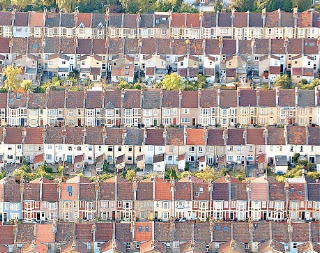
The majority of housing in the UK are replicas off one another, for example the victorian terraced houses in many British towns. Now i appreciate that one developer was likely to produce an entire town. However it is likely this was then 'copied' almost identically by another architect. In this era it was more a case of practicality that architectural flair however it is still an occurrence where plagiarism has had a positive effect.

This is definitely a research topic I will explore further, in particular whether there were any cases of plagiarism being brought to light during these earlier periods.


Image: www.telegraph.co.uk

The Dentist's Chair - The Obvious Source of Architectural Inspiration!


Nigel Swift and David Paisley's recent article in the German Life and Letters Publication, explores the private accusation of plagiarism to Sir Basil's Spence's Coventry Cathedral.

' Dominikus Bohm, Sir Basil Spence and the Dream in the Dentist's Chair. A German Source for Coventry Cathedral' 


The article explores the similarities between the German architect's Church of Saint Johann in Neu-Ulm, with Sir Basil Spence's rebuild of the Coventry Cathedral. The document goes into lengthly descriptions of the two churches, the first of which was built in 1927, and the second being rebuilt by 1952.

There a several obvious similarities between the two designs. Not only are the floor plans very similar but the unique 'zig-zag' walls, the two exterior chapels and orientation of light are almost identical. Both buildings orientate the windows towards the alter so they are invisible when you enter the church. The floor plan and drawing of the Church of Saint Johann were published frequently within architectural journals in particular in America. It is impossible to prove whether Spence had seen plans of the church, however he was certainly able to access them. What does make the situation sound rather suspicious is Spence's reasoning when he was later questioned over plagiarism:

"My dream was wonderful. I was walking through the Cathedral and it looked marvellous, with a light like Chartres. The alter looked tremendous, backed by a huge tapestry, but I could not see the windows until I went right in and turned half back - the walls were zig-zagged!"

Spence, Sir Basil. Phoenix at Coventry. London. 1962

Don't get me wrong, I am well aware the creative individuals can often be very eccentric, but Spence's miraculous dream whilst under general anesthetic in a dentist's chair does seem a little far fetched. In my opinion dreams are based on memories, it takes a previous encounter to spark a new idea or experience. This was also the conclusion of Swift and Paisley in their article.

" We would rather suggest that the mental process at work in the dentist's chair was not inventive imagination, but memory, memory of a specific architectural plan whose identity had already been signaled ...." 

Swift, Nigel. Paisley, David. "Dominikus Bohm, Sir Basil Spence and the dream in the Dentist's Chair: A german source for the Coventry cathedral." German Life and Letters. Volume 64 Issue 2. (2011): p 248.


The images above so the resemblance between the two interiors which is accentuated by the roof vaulting. The top image is the Coventry Cathedral and the second the Church of John the Baptist. The similarities is even clearer in the floor plans below, illustrating the zig-zag wall construction.

Swift and Paisley were not the only ones to challenge the source of inspiration, Louise Campbell also explores the possibility of a 'forgotten source' and perhaps we are subconsciously influenced by previous encounters. 

It may also be concluded that Spence did later admit to plagiarism in so many words, he definitely believed in subconscious influences. "I am quite certain there are sub-conscious ones" Taken from a letter from Spence to Nikolaus Pevsner (19 June 1956) - 4 Years after the Coventry Cathedral was completed.

Campbell, Louise. Coventry Cathedral: Art and Architecture in post war Britain. London: Clarendon Press. 1996 p.87

Sources of Images:

Joe Blogs - Musing from the riverside - www.wharferj.wordpress.com
Dominikeus Bohm - www.wikipedia.org.uk
www.panoramio.com
www.oneexwidow.blogspot.co.uk


Thursday, 13 September 2012

Organized Paperwork = Plagiarism Avoided

As i have explained previously, the aim of the blog is to actively publish my research as i progress. Therefore in affect the blog will ultimately replace my notebook or several hundred pieces of A4 lined paper. This may be the case for most students on their dissertation adventure, however i am quite the opposite being ridiculously organized and a big fan of lists (and the delight that is achieved in crossing a job off the list) It is because of this i have created a research template.


For each research document I will use this template to extract the relevant information. Information gained from the article can be noted as well as key quotes, which i may want to include at a later date. The most important section is the 'direction of study/next steps in research' this will prompt me to make a conclusion from the research before moving on to the next article. Most importantly it encourages me to THINK (something I have not done a great deal of over the summer period.)

Other aspects include a full citation and a tick box to remind me to store the reference into Endnote. I will complete a research template page for ever aspect of my research as well as printing and filing a hard copy of the article. This makes the research accessibly at a later date.

"Told you i was organized, either that or I am very conscious I would be made a mockery of if I plagiarised whilst writing about plagiarism" Ellis-Taylor,A.(2012,September 13th). 

Rip off Design Hits USA! (well 37 people at least)

The purpose of constructing a blog is to encourage me to write as and when I research my topic. My Rip off design blog acts as a platform for me to live stream my research to any readers, allowing them to comment as the research is found, rather than several months later.

Blogger allows me to track my audience as well as sharing any new blog posts via my social media sites i.e. Facebook & Twitter. As of the 13th September, my blog has 145 page views. 94 of which are from the UK and 37 are from people in the United States. As I personally have not shared my blog directly with anyone in the US, it therefore proves that people have become aware of my blog through my social media sites, most likely Twitter. As my blog progresses, and I publish my research online, the audience statistics should increase, therefore allowing a wider audience to interact with my research.


For my blog to be successful I need to 'post' regularly. I aim to write at least twice a week, especially once I am attending University full time. This will be encouraged, due to my research methodology, as  I plan to use my blog to document all aspects of my research.

Tuesday, 4 September 2012

Is Social Media the 21st Century Research Technique

Now don't let my post title fool you. I am very much a traditionalist when it comes to most things, for example, i'd never be seen dead with a kindle and get very excited at the thought of wearing white gloves to search endlessly for research. However as my topic of research is very much based on opinion and discussion, i think i would be missing a trick if i didn't incorporate the social media epidemic that seems to be sweeping every aspect of our life.

The majority of professionals have a smart phone, and the unfortunate truth is, most people are connected to their business 24 hours a day, via email, website, blogs or twitter. In 50 years time everybody's lives will be simultaneous streamed through social media via a Facebook status,  a live blog post or a tweet. Some may be skeptical to get on board (which saying that i was at first) however it can't be denied, that if you have something to say, social media is the answer if you want to be heard. FAST!


My aim is to set up a series of social media accounts in order to spark discussion amongst the architectural society. As my research and dissertation develops i will then be able to log information, comments etc as i go.

Twitter will be my main driver along with this blog. Twitter works on the concept of followers and tweets. A person my tweet a short comment/question or picture which is then available to read by their followers. Within a tweet a person my attach another person using the @ symbol. For example " I attend Liverpool School of Architecture @RIBA". The RIBA would then be notified that i had 'mentioned' them in a tweet. If they chose to 'retweet' my comment, it would then be visible to the RIBA's followers, bearing in mind as off 04/09/12 that was at 25,600. You get my gist. Twitter has the potential for your information to be read by millions of people within your field of interest.

Feel Free to follow my twitter account  www.twitter.com/ripoffdesign

Facebook and LinkedIn work in similar ways, however in my opinion, they are less effective. However all of my blog posts are shared via my facebook account: www.facebook.com/aellistaylor

As off today, i currently have 32 followers on twitter, one of which is the RIBA, i hope to double this within the next two months. Gavin Johnson at Golf Club Advisor www.golfclubadvisor.co.uk has kindly offered to incorporate my twitter account into their social marketing software. This will allow me to evaluate how useful my social media accounts have been in collating research and sparking discussion.